|
|
Dogs - Australian Cattle Dog Breed
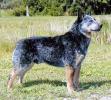 A Tribute to the Australian Cattle Dog A Tribute to the Australian Cattle Dog
A book by Gerald Walsh, called "Pioneering Days", is more than a series of
well told yarns. It commemorates the work of Australia's forgotten
pioneers and the innovations that have contributed so much to Australia's
rural development. It establishes the foundations of rural Australia, and,
thoughtfully, the author has included a chapter on the Australian Cattle
Dog
Gerald Walsh is no stranger to rural Australia. He is a senior lecturer in
History at the Australian Defense Force Academy, Canberra and is the
single contributor to the "Australian Dictionary of Biography".
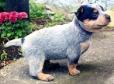 Robert Kaleski (1877-1961), the first serious writer on Australia's
working dogs and author of "Australian Barkers and Biters" (1914-1933)
once suggested that if Australians wanted to honor the pioneers of their
vast continent, they should erect two statues in everlasting bronze. Robert Kaleski (1877-1961), the first serious writer on Australia's
working dogs and author of "Australian Barkers and Biters" (1914-1933)
once suggested that if Australians wanted to honor the pioneers of their
vast continent, they should erect two statues in everlasting bronze.
The second one should be that of a pastoralist, a Merino beside him and
his faithful sheep dog at his feet; but the first one should be that of a
bullock driver or teamster, with green hide whip on his shoulder, standing
beside his dray, bullock team and his cattle dog.
Kaleski had a point. While he rightfully acknowledged that the wool grower
and Marino made Australia prosperous, it was the trail-blazing teamster
with his team of bullocks and cattle dog who went before him and broke the
way.
Like the Kelpie, the Australian Cattle Dog as he is now called, was
especially bred for Australian conditions, but his history goes back a
little further and is less controversial, this largely due to the work and
writings of Kaleski himself, who did much to help fix the breed at the
beginning of the twentieth century.
Born at Burwood in Sydney, Kaleski, a dog owner at six and a breeder and
worker of cattle dogs at nine, was often in strife for coaxing dogs into
school. "I'm sure there's a dog somewhere Kaleski, do you know anything of
this?" was his exasperated teacher's frequent question as the class
erupted with glee.
As a boy he lived for long periods at Holdsworthy, south-west of Sydney,
where he dodged school but learned much about bush craft and nature. His
long absences from school meant he was largely self-educated, though he
later came under the influences of Henry Lord, a lecturer in Agriculture
at the Sydney Technical College.
Droving and station work at Grenfell were followed by a variety of
occupations before he took up a selection at Holdsworthy, and later, in
1918, a 300 acre farm at Moorebank, near Liverpool, where he lived as a
bachelor for the rest of his life.
From his mid-twenties, often under pen names, including 'Falder', Kaleski
wrote on a wide variety of practical subjects for the Agricultural Gazette
of New South Wales, the Bulletin, Sydney Mail, the Sydney Morning Herald
and the Worker.
By 1909, when he wrote "The Australian Settler's Complete Guide for
Anthony Horden & Sons Ltd., he was aptly described by the "Workers" as
"one of the practical men...dog expert, writer, inventor, all round man
and a good many other things">
His abiding and life long interest however, was the dog, especially the
Dingo (Canins familiaris dingo) and the blue cattle dog.
According to Kaleski, the first dog used for working cattle in Australia
was the black bob-tail (sometimes called the Smithfield or stump tail
cattle dog ), a large, square bodied, long legged black dog, usually with
a white frill around the neck and saddle flap ears. While this breed was
good with quiet stock, its long coat and heavy frame meant it could not
stand the heat or long droving trips
The need for a more lightly built and shorter haired dog became especially
apparent as the squatters began to follow the explorers paths in the
1830's, and cattle raising spread over a wider area.
Among those who turned their attention to this problem, was a drover,
Michael Timmins
Michael Timmins regularly brought cattle from Bathurst, over Bell's line
of Road to the Sydney sale yards. Timmins crossed the black bob-tail with
the Dingo to get a red bob-tail, popularly known as 'Timmins Biters'or
Timmins Heelers.
This cross was an improvement, as his dogs were active, fast, and
practically silent workers. However, they were hard to control, and worst
of all, they were very severe biters with a tendency to maul or kill
calves when working out of site of the stockmen.
To get over these problems, Timmins crossed his heelers with the collie
and although he produced some wonderful workers, this cross did not "breed
in", in that its good qualities were not always passed on to its progeny.
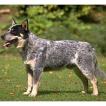 Most of the Timmins breed gradually died out, but according to Kaleski,
writing in 1935, the strain survived in the Queensland blue stumpy - a
cross between the red bob-tail and a modern blue speckled cattle dog.
Others tried to cross the Rough Collie and the Russian Sheep Dog (or
Owtcher) and the Rough Collie and Bull Terrier, both of which apparently
produced uncontrollable progeny that were savage and crippling biters. In
some places where the cattle were very wild, a cross of Kangaroo Dog,
Bulldog and Collie was tried without much success and these soon died out. Most of the Timmins breed gradually died out, but according to Kaleski,
writing in 1935, the strain survived in the Queensland blue stumpy - a
cross between the red bob-tail and a modern blue speckled cattle dog.
Others tried to cross the Rough Collie and the Russian Sheep Dog (or
Owtcher) and the Rough Collie and Bull Terrier, both of which apparently
produced uncontrollable progeny that were savage and crippling biters. In
some places where the cattle were very wild, a cross of Kangaroo Dog,
Bulldog and Collie was tried without much success and these soon died out.
Though many people contributed to the development of the Australian Cattle
Dog (or "Blue Heeler"), the man who can be said started it all, was Thomas
Simpson Hall 1808-1870, of Dartbrook, near Musselbrook, New South Wales, a
pioneer cattle man of the Upper Hunter.
In 1840, he imported from Scotland, a pair of smooth-haired, blue-grey
merles (marbled or mottled dogs) which were a cross between the Italian
Blue Greyhound and the rough haired Scotish Ollie. These dogs worked
cattle fairly well but were poor biters, and because they barked and
headed too much, they tended to make the cattle wild which ran the fat off
them.
Hall then crossed the progeny of his merles with the Dingo. The result was
a great success, as it produced an intelligent, hardy and tireless dog
that possessed the Dingo's instinct of creeping up silently behind a beast
and biting. In color they were blue or red speckled, depending on whether
the Dingo or merle predominated.
Tom Hall's dogs soon developed a reputation as first class workers and
became well known all over the Hunter Valley and the New England district
as "Hall's Heelers". Later, others, including George Elliot of Queensland
also experimented with the merle-dingo cross and likewise produced
excellent lines workers of workers.
The next stage of the development of the Australian Cattle Dog took place
around Sydney. Some time in the 1870's, "Pilla" Davis, fat stock buyer for
the family firm of carcase butchers, who had paddocks and a slaughter yard
at Canterbury, bought some of "Hall's Heelers" to Sydney. The dogs
attracted the attention of drovers, butchers, and others who set out to
improve upon what was still, after all, a first cross.
Numerous names are mentioned by kaleski as having some part in improving
the breed: The Lees (who very probably introduced Bull Terrier blood), The
Peeks, The Jubbs, Jack and Harry Bagust, C Pettit, J Yabsley, J.Brennan of
Summer Hill, Owen Nolan of Clovelly and Alex Davis of Canterbury, who was
in partnership with Kaleski himself in breeding working dogs in the late
1890's. Another was Henry Rose of Burwood.
It was the Bagust brothers, Harry and Jack, who lived near Davis's
slaughter yards, who were really responsible for developing "Halls
Heelers" into what we know today.
The Bagust's noted that the heeler was deficient in three desirable traits
- an affinity and fondness for horses, a guarding instinct and the
capacity for working the sides and head of a mob.
Crossing them with the Dalmatian, essentially a horse and carriage dog,
imparted the first two qualities. It also smoothed the coat, gave them an
attractive speckled colour, and eliminated the 'wall' or white eye,
prevalent in the merle. The clever head and side working ability was
produced by a cross with a Black and Tan Kelpie.
These crosses however, were not without problems. The Dalmatian influence
tended to bring out drop ears and thin tails, while the Kelpie cross
tended to make the body colour too dark and the dogs a little too fine in
the muzzle, at the expense of the strong biting jaws of the Dingo. But the
Bagusts persisted and after a lot of patient work, came up with the dog
they wanted. As the Bagusts said, "We bred a lot and we drowned a lot".
It should also be noted that at some stage during this process, a blue dog
of the same pure Hall strain, owned by Tom Bently, a butcher at the Glebe
Island abbatoirs, was crossed through the Bagust dogs. According to
Kaleski, writing in 1911, all the early blue cattle dogs of any note were
descended from "Bently's Dog", a great worker of fine proportions and
appearance.
By the turn of the century Australian Cattle Dogs had become very popular.
Kaleski, at the request of interested breeders, drew up the standard that
was published in the Agricultural Gazette of New South Wales in 1903.
This standard for the blue heeler was adopted by the original Kennel Club
of New South Wales of which Kaleski was Honorary Secretary and also
adopted by the Cattle and Sheep Dog Club of Australia (founded by Kaleski
in 1907), and the Royal Agricultural Society of New South Wales.
In his 1903 standard, Kaleski called the dog the "Merlin" or blue heeler,
but since that time the dogs name has gone through several changes. The
standard, whilst basically Kaleski's has been modified slightly.
Names including "Queensland Heeler" or "Queensland Blue Heeler (as the
dogs were indispensable to the stockmen in the cattle state), "Australian
Blue Cattle Dog" and "Australian Heeler" were used until finally,
"Australian Cattle Dog", which is its official name was adopted, although
the dog is more commonly known as the "Blue Heeler".
In 1925, C.Laurence and A.A.Blakenny, drew up a new standard which was
published in the "Australasian" on 28th November, that was adopted by the
Cattle and Sheep Dog Club of New South Wales and agreed to by the
N.S.W.Kennel Control Council.
In 1928, the N.S.W. Stock Dog Club compiled a standard which went into
more detail about desirable measurements, which, according to old
established breeders, exactly fitted the ideal specimen but this standard
was never adopted by the Kennel Control Council.
Like Kaleski's, both standards stated that the blue heelers general
appearance should be that of a thick-set Dingo. However, the current
standard, adopted by the A.N.K.C. in January,1963, makes no mention of the
Dingo.
Kaleski, using the Bagust strain until his death in 1961, was a very
successful breeder and prize winner, especially at the Royal Agricultural
Society's Sydney Show. With his dog "Nugget", he founded the noted
"Nugget" strain of prize winners which included such champions as Clovelly
Mavis and Clovelly Biddy.
By 1910 he claimed that his efforts had raised the price of a cattle dog
from "five bob for the pick of the litter" to as much as ten guineas.
Little wonder that owners went to so much trouble to prevent their young
dogs from being stolen. Some put a marked three-penny piece under the skin
of the dog's forearm. This ruse became so well known as to be useless.
Kaleski used tattooing as early as 1903. Today, a good cattle dog is a
prized possession and is worth hundreds of dollars.
The Australian Cattle Dog which quickly became very popular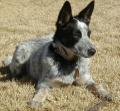 with stockmen
and drovers in Queensland and New South Wales, as well as in Victoria
where it was mainly used for herding dairy cattle, is the only pure breed
of cattle dog in the world and is by far the best worker of cattle. with stockmen
and drovers in Queensland and New South Wales, as well as in Victoria
where it was mainly used for herding dairy cattle, is the only pure breed
of cattle dog in the world and is by far the best worker of cattle.
It works as silently and as tirelessly as its forebear, the Dingo. Its
courage and biting power enables it to shift the most stubborn beast and
send it in the right direction. It is stronger and better able to look
after itself than many larger dogs and can withstand extremes of weather
and terrain.
Not the least of the heelers qualities is its loyalty and devotion to its
owner and its owner's possessions Suspicious by nature, it is an
outstanding watch dog and stories of its watchfulness, faithfulness and
heroism are legend.
The well-trained heelers worth was soon widely expressed in such
appreciative truisms as," A good cattle dog is a man's living", and "A
good cattle dog is worth as much as a good horse".
In addition to being a good working dog and a family pet, the heeler was
found to be a good hunting companion as well. In 1925, the soldier and big
game hunter, Captain Arnold Weinholt (1877-1940) of Kalbar, in Queensland,
took two heelers, Pincher and Coil, to Africa where they proved themselves
invaluable in tracking wounded lions into the thickest jungle. Previously,
Weinholt had used dogs of an Airedale-Bull Terrier cross, but fatalities
were frequent as these dogs were often tempted to mix it with the big
cats. The heeler however, had enough ginger to go in and worry the lion
but as they always kept behind the prey, they avoided being mauled.
The Australian Cattle Dog has its monument, though not quite on the scale
that Kaleski had suggested. On a bridge near Scone, in the fertile Hunter
Valley, the local shire council has erected a bronze plaque, donated by
the Australian Cattle Dog Society of New South Wales, commemorating the
pioneering work of Thomas Simpson Hall. The bridge, named the "Blue Heeler
Bridge" was official opened on the 14th August,1976.
There is however, another very famous monument featuring the cattle dog -
The Dog on the Tuckerbox - nine miles north of Gundagai. While the dog
guarding his masters tuckerbox is a monument to the pioneers of the
district, there is the link to the story of the Australian Cattle Dog: The
sculptor, Francis Rusconi, used one of Kaleski's dogs as his model.
Author Unknown
Top resource sites about the Australian Cattle Dog
Want great
medicine for your Australian Cattle Dog's arthritis?
Try Synflex. the arthritis medicine that they offer really does help
dogs of all types, sizes, breeds, and medical backgrounds.
Check out synflex
for your Australian Cattle Dog today!
http://www.acdro.com/
-= Welcome to Australian Cattle Dogs On Line =-
If you are a fan of the wonderful Australian Cattle Dog (aka Blue Heeler, Red Heeler or Queensland Heeler), researching breeds, or if you just
Australian Cattle, australian cattles, dogs breeders, puppies
Australian Cattle Dog classified ads for purebred puppies and dogs from professional to hobby Australian Cattle Dog breeders...
=: Australian Cattle Dog Club of America :=
The www.acdca.org website design and contents ©2004 by the Australian Cattle Dog Club of America, Inc.
<-> Australian Cattle Dog . Com <->
Most popular online community of Australian Cattle Dog Fanciers. Complete Australian Cattle Dog information, references, and resources.
Guardian Unlimited | Special reports | 'Oldest' dog heads for 27th...
He could push on to 28." The oldest dog on record was an Australian cattle dog named Bluey, who died in 1939 at the age of 29.
Australian Cattle Dog Rescue for Mid-Florida
Australian Cattle Dog Rescue, animal rescue, we rescue unwanted and find them happy homes...
Dogs - Pictures, Breeders, Puppies, Rescue, Photos
Dogs pictures. Pictures of DOGS has great Dog pictures! New dog pictures added periodically! DOG pictures of interesting dogs. www.gotdogsonline.com...
New Hope Cattle Dogs - ACD Breed Rescue
New Hope Cattle Dogs' mission is helping discarded, stray and unwanted Australian Cattle Dogs ... the family and if there is a Cattle Dog in need...
Heeler Home
Shop Australian Cattle Dog -click below to connect...
|
|
 Your Dog Zone.com